The Art Museum: a visitors guide
Tools: Articulate Storyline, Figma, Procreate, Canva, Miro
Learning Objective: By the end of this module, learners will be able to identify, analyse, and apply strategies for using museums as active learning resources.
Outcome: Learners gained an understanding of how cognitive and connective learning differ, their benefits and challenges, and how blended approaches can offer effective solutions..
Impact: By experiencing these theories through scenario-based storytelling, learners developed practical insight into different learning styles and how to apply them in real contexts
Audience
Art and design students, as well as general museum visitors seeking more meaningful, self-directed engagement.
My Role
Instuctional designer, researcher, content creator, and visual designer (map-based navigation, illustrations, prototype build).
Learning Theory
Constructivism and experimental learning: learners built knowledge by exploring museums in ways that connected exhibits to their own ideas and experiences.
The Problem
Museums hold vast amounts of knowledge, but the experience can feel overwhelming for many visitors.
Dense wall text, detailed labels, and fixed exhibition routes often lead to disengagement or confusion.
Students struggle to move beyond passive observation and connect exhibits to their own creative practice.
The general public often finds it difficult to make personal meaning from what they see.
The challenge was to design a learning experience that reduces information overload and helps visitors actively navigate, interpret, and apply what they encounter in the museum..
The Solution
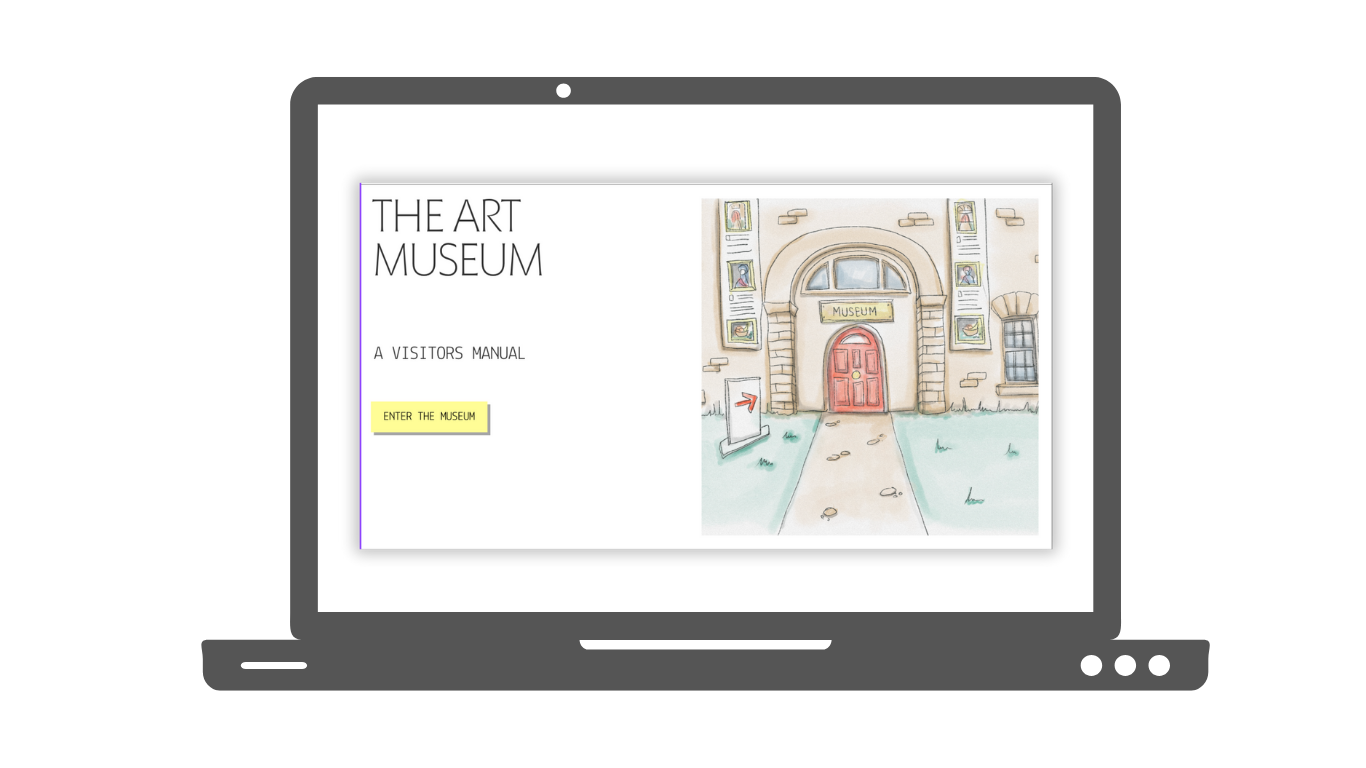
Designed a digital training programme that reframes the museum as a learning journey.
An interactive map lets learners choose their own path through themed rooms, Think, Talk, Explore, and Play.
Each room provides practical strategies, activities, and scenarios to build confidence in using museums as learning resources.
Printable prompt cards extend learning into real-world visits and encourage reflection beyond the screen.
The result is an accessible, engaging experience that empowers learners to slow down, explore meaningfully, and see museums as living spaces for discovery.
Development Process
Using a combination of the ADDIE and SAM frameworks, and academic and observational research, I created a four section course structure, based on the struggles museum visitors encounter.
Action Mapping
Analysed museum learning challenges and determined the core actions visitors need to take to connect exhibitions to their own ideas.
Storyboarding
Designed and sequenced the learner’s journey through the museum’s themed rooms (Think, Talk, Explore, Play) by illustrating key interactions.
Visual Concepts
Created and represented the look and feel of the interactive map and digital rooms to demonstrate navigation and atmosphere.
Interactive Prototype
Developed and tested a clickable version of the training to simulate museum visits and evaluate learner engagement in Figma.
Full Development
Constructed and refined the complete digital training programme, integrating interactive elements in Articulate Storyline, downloadable prompt cards, and used storytelling to empower learners.
Action Map
I began by analyzing the challenges visitors face in museums — such as information overload and difficulty connecting exhibitions to personal experiences. Through action mapping, I determined the key behaviors learners needed to develop: asking questions, making connections, and reflecting actively. This step ensured that every element of the training programme aligned with real actions, not just abstract knowledge.
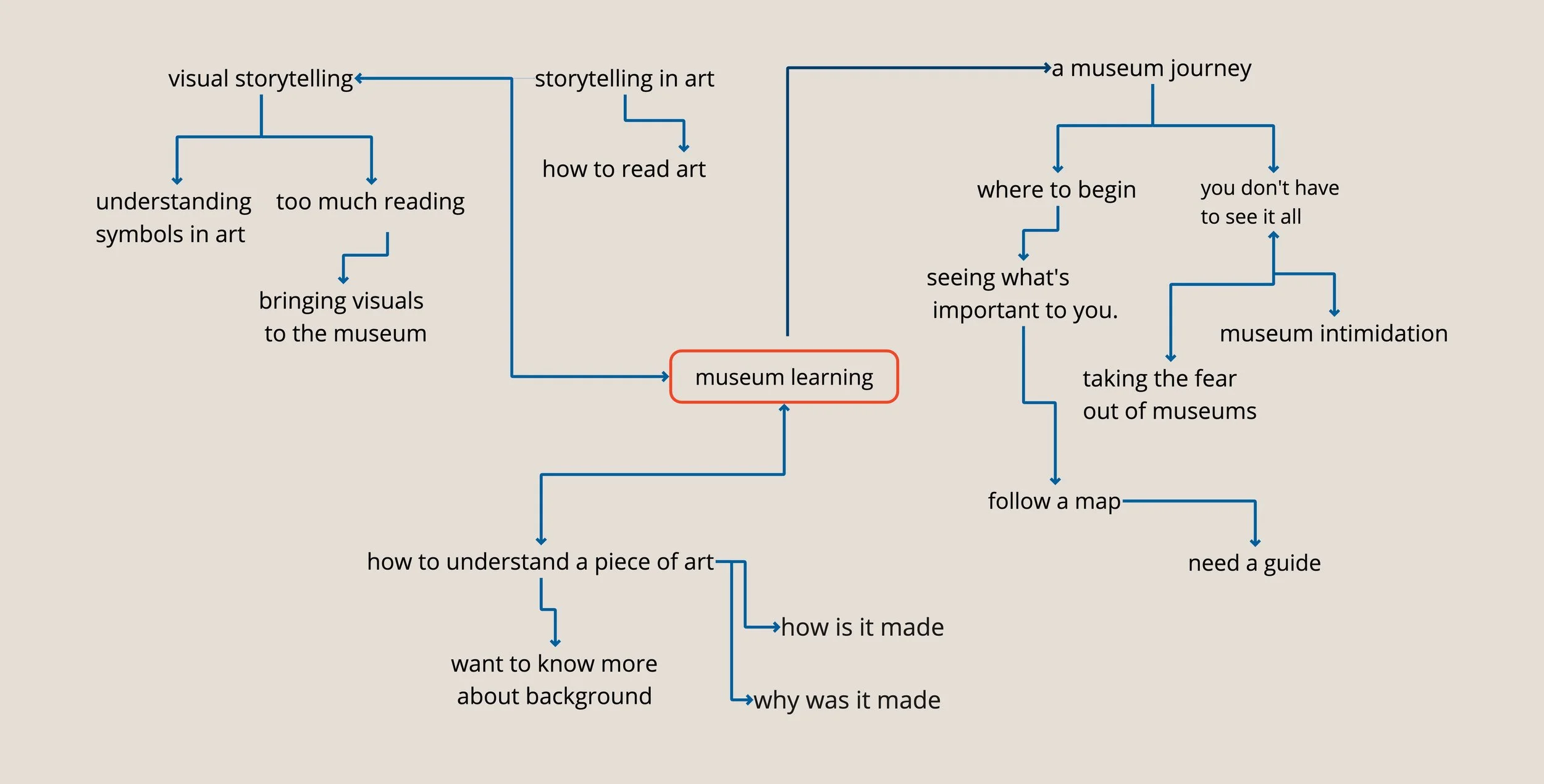
Brain map - for establishing areas of musuem learning
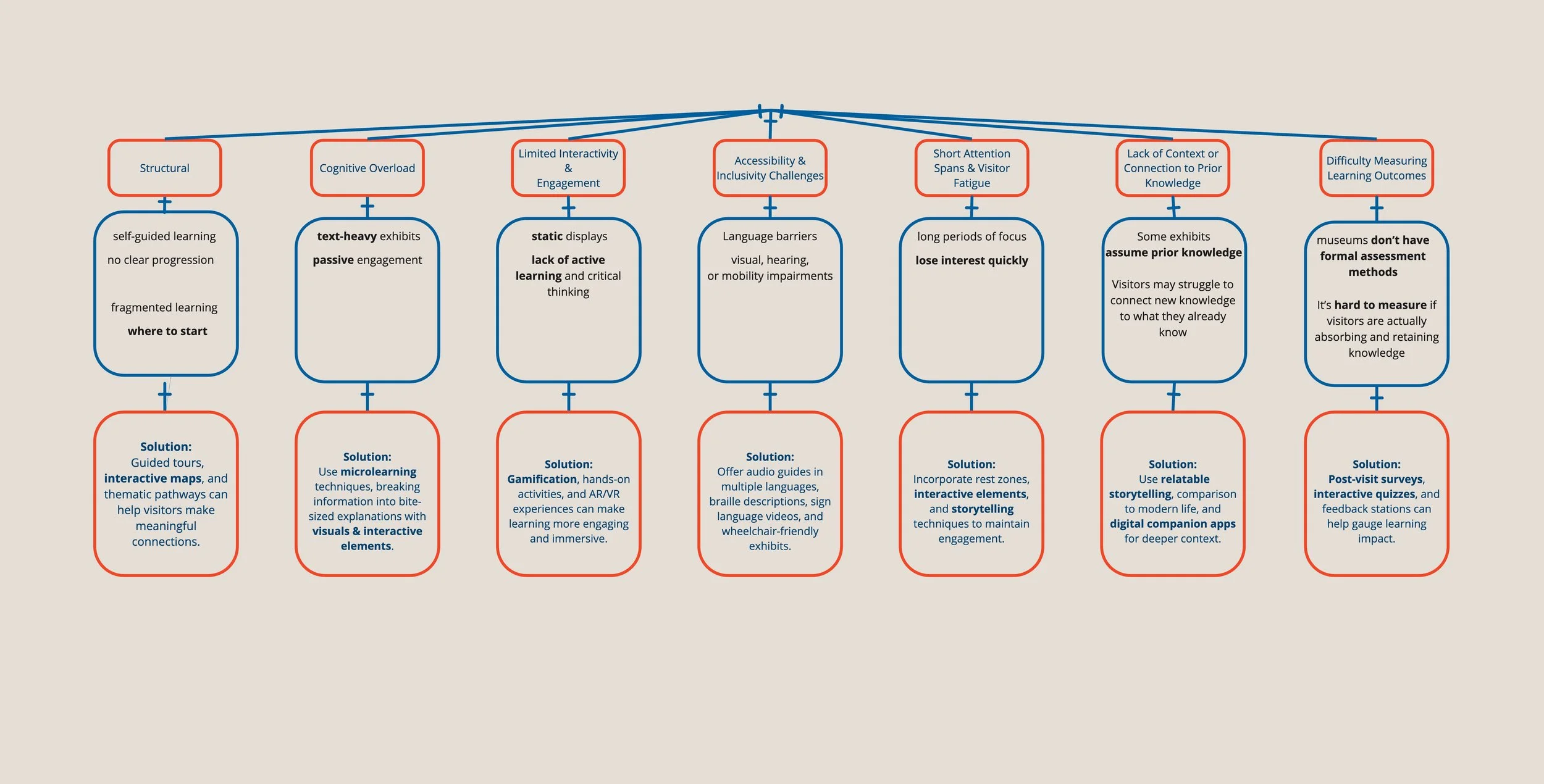
Problem mapping - identify key problem areas within museum learning
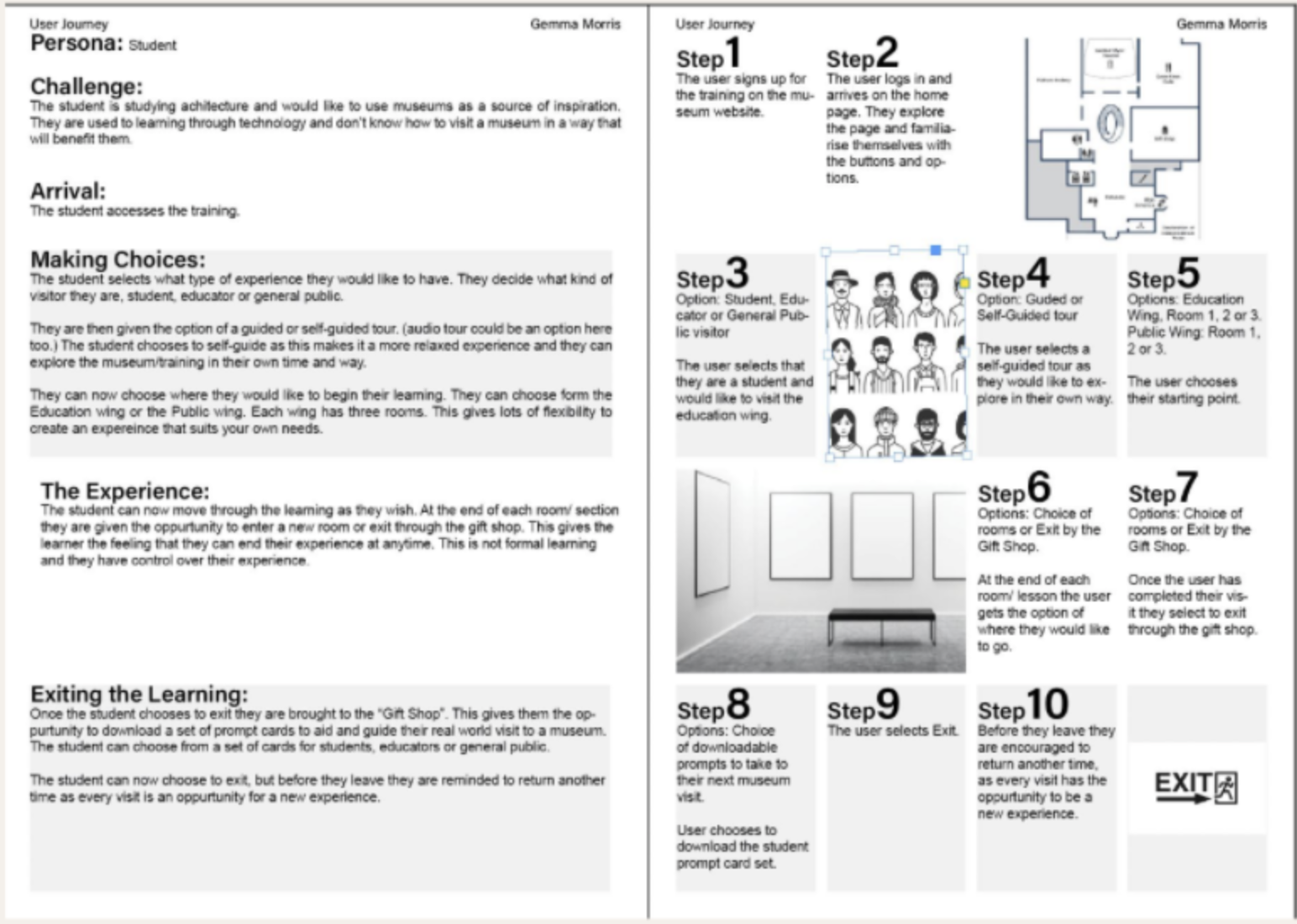
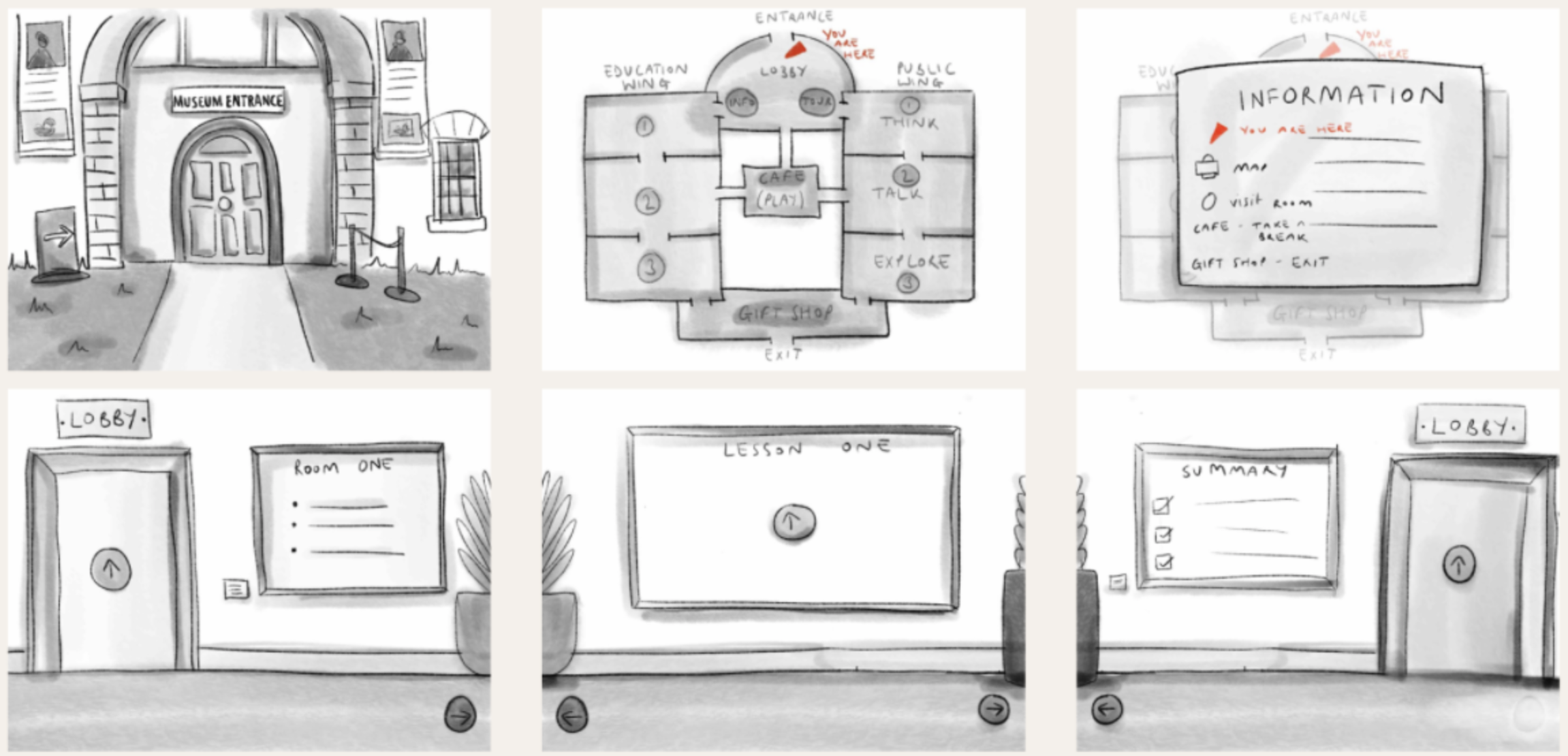
Storyboarding and User Journey
I plotted the user journey in InDesign, mapping out how learners would navigate the training. The design was built around an interactive map, which served as both a navigation tool and a metaphor for the museum journey. Each lesson was themed around a different learning approach to suit diverse visitors:
Explore – personalise your visit and discover what interests you most.
Think – engage in reflective learning and practice slow looking.
Talk – collaborate through conversation and constructivist learning.
Play – experience the museum with hands-on activities and learning through play.
By sequencing these lessons visually, I created a clear framework that balanced structure with learner choice, ensuring the experience felt intuitive, flexible, and grounded in learning theory.
Visual Concepts
Using InDesign, Miro, and Procreate, I created a visual direction for the training that balanced clarity with creativity.
I developed a colour story, illustrative assets, and a mood board to guide consistency.
The design intentionally combined a clean, minimal layout and simple fonts with fluid, hand-drawn illustrations, echoing the blend of structure and exploration at the heart of museum learning.
A muted colour palette was chosen to keep the interface calm, with pops of colour highlighting buttons and areas of importance.
To reduce cognitive overload, I kept text minimal and reinforced navigation through the repetition of button placement, encouraging intuitive learner activity.

Interactive Prototype
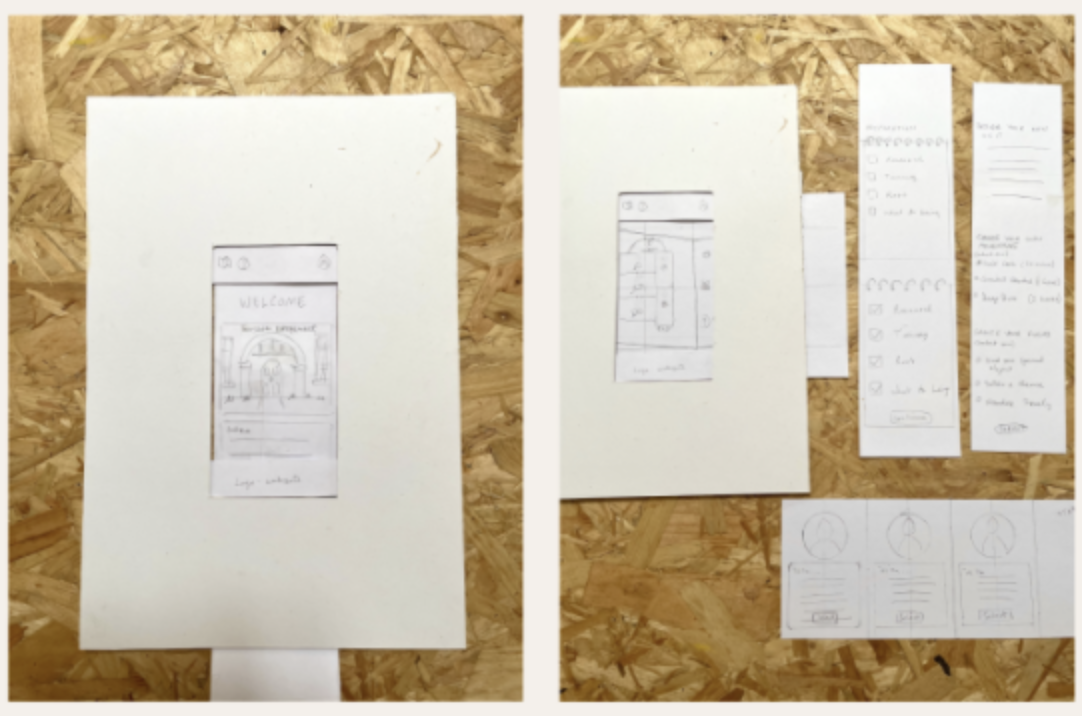
My prototyping process moved through three stages, each designed to test and refine the learner journey before full build:
Paper Prototype
Created quick sketches of the map and room layouts.
Allowed for rapid, intuitive changes without technical overhead.
Mobile Prototype (Figma)
Developed a clickable version optimised for handheld devices.
Ensured the design worked in the way learners would realistically access the training.
Digital Prototype (Articulate Storyline)
Built a functional model with the interactive map and themed rooms (Explore, Think, Talk, Play).
Tested usability, evaluated learner flow, and gathered feedback.
This staged approach provided opportunities to experiment, refine, and validate the design at multiple fidelity levels, ensuring the final programme would be both accessible and learner-centered.
Full Development
The final stage brought all elements together into a cohesive, learner-centered programme:
Integration of Content and Design
Constructed the full digital training in Articulate Storyline.
Integrated text, visuals, and interactions into a seamless user journey.
Interactive Features
Added map-based navigation to allow learners to choose their path.
Included scenario-based activities and self-reflection prompts to engage different learning styles.
Supporting Materials
Created printable prompt cards to extend learning into real-world museum visits.
Designed resources to empower learners to personalise and reflect on their museum experiences.
Refinement
Reviewed learner flow for clarity and accessibility.
Adjusted visuals, navigation, and content to ensure minimal cognitive load and intuitive interactions.
This stage consolidated the project into a complete training programme that is flexible, engaging, and rooted in sound learning theory.
Results and Takeaways
The evaluation stage of the ADDIE process provided strong evidence that the museum learning training had a positive impact on learners. Early feedback was gathered through surveys embedded in prototype testing, combining both quantitative and qualitative results.
Learning Effectiveness (30-point scale)
Pre-test average: 18/30
Post-test average: 28/30
This significant increase demonstrates that participants gained confidence and knowledge through the training, particularly in how to approach and personalise their museum visits.
Usability Survey (35-point scale)
Average score: 32/35
This indicates that learners found the design intuitive, easy to navigate, and supportive of their goals.
Qualitative Feedback
Testers described the programme as fun, clean, minimal, and engaging.
Features such as the explorer theme, prompt cards, and checklist were highlighted as valuable additions.
Suggestions for refinement — such as making line work bolder, improving button clarity, and adjusting icon visibility — offered actionable insights for future iterations.
Overall, the combination of improved confidence, high usability scores, and positive tester comments shows that the training successfully empowers museum visitors to engage more deeply with exhibitions. The results validate the design choices and confirm the programme’s effectiveness as an innovative learning tool.